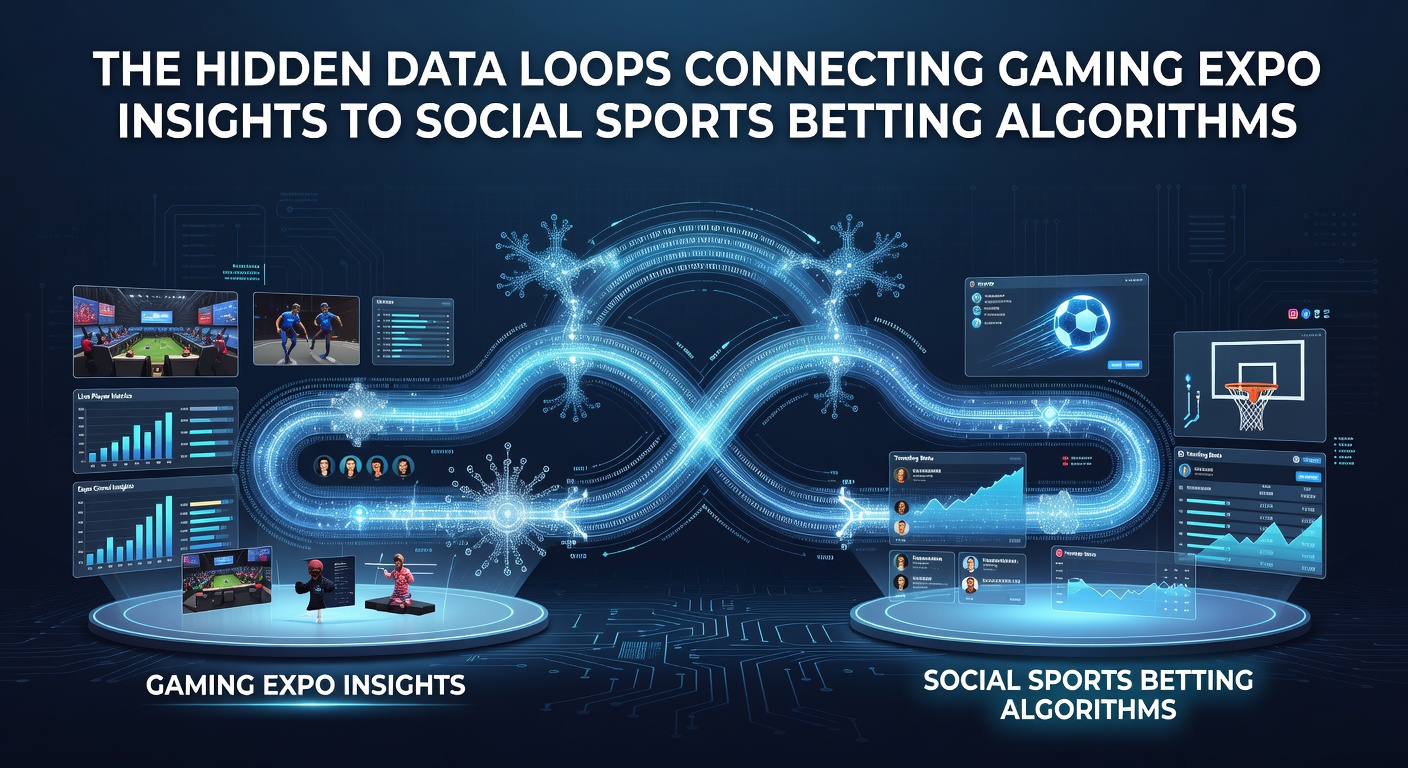
Tracing Data Pathways Between Expo Insights and Social Sports Betting Systems
Trade shows and industry gatherings generate streams of performance metrics, user engagement patterns, and technology demonstrations that flow directly into the design of social sports betting algorithms, creating closed feedback systems where information collected at events shapes real-time wagering features on digital platforms. Observers note that these loops operate through aggregated datasets shared between event organizers, software developers, and betting operators, allowing adjustments in prediction models based on live interactions recorded during expos.
Expo Data Capture Mechanisms
Attendees at major gatherings provide behavioral signals through app usage, booth interactions, and session attendance, while organizers compile these into reports distributed to partners in the igaming sector. Research indicates that sensors and registration systems at these venues record dwell times, device types, and topic preferences, which then inform algorithm parameters for social features such as friend-based challenges or group prediction pools. Data shows that companies attending events in Las Vegas or similar hubs often integrate these findings within weeks, updating their backend systems to reflect observed trends in player retention and social sharing rates.
Regulatory bodies in multiple regions track how such information moves across borders, with Canadian authorities requiring transparency in data handling for operators licensed under provincial frameworks, whereas Australian oversight bodies emphasize consumer protection standards that affect algorithm transparency. Figures reveal that participation numbers at recent expos have climbed steadily, supplying larger sample sizes for statistical modeling used in social betting interfaces.
Algorithm Adaptation from Event Insights
Social sports betting platforms refine their matching engines and odds presentation layers by incorporating anonymized insights harvested at expos, where developers showcase prototypes and collect immediate feedback on interface elements. Those who've studied these processes describe how heatmaps from demo stations translate into weighted variables within machine learning models that prioritize certain bet types or community notifications. Evidence suggests that when an expo highlights emerging virtual reality integrations, corresponding updates appear in apps that allow users to place wagers alongside avatars of friends, tightening the connection between physical event data and digital experiences.
One documented pathway involves middleware layers that standardize expo-collected metrics before they enter production environments, ensuring compatibility across different operator databases. This standardization reduces latency in how quickly new social mechanics, like leaderboards tied to real sports events, reach end users. Industry associations based in Europe have published guidelines on ethical data reuse from such gatherings, encouraging operators to audit their loops for unintended bias amplification.
June 2026 Developments and Scheduled Events
Preparations for gatherings planned in June 2026 include expanded data capture zones equipped with real-time analytics dashboards, allowing exhibitors to test social betting prototypes against live audience responses. Government agencies in Asia-Pacific regions have signaled interest in reviewing how these enhanced collection methods align with cross-border data transfer rules, particularly when algorithms serve international user bases. Reports from academic institutions highlight that prior cycles of expo-to-algorithm transfer have produced measurable lifts in session duration for social features, with some platforms reporting sustained increases after incorporating event-derived variables.
Operators often schedule internal reviews immediately following major shows, mapping collected statistics onto existing code repositories that govern friend invitations and shared outcome predictions. This timing creates predictable pulses in system updates, where summer events feed fall releases of enhanced social modules. Those monitoring the sector observe that partnerships announced at expos frequently accelerate the adoption of specific data formats, further solidifying the loops between on-site observations and remote platform behavior.
Geographic Variations in Data Utilization
North American operators tend to emphasize rapid iteration cycles that leverage expo data for competitive differentiation in social betting offerings, while counterparts in other markets focus on compliance layers that filter the same datasets through stricter privacy filters. University-led studies from institutions outside traditional gambling hubs have examined these differences, documenting how regional regulations shape the granularity of information permitted to re-enter algorithmic training sets. Trade groups representing software providers facilitate knowledge exchange sessions that explicitly address these variations, helping members adapt their pipelines accordingly.
What's interesting is the role of third-party analytics firms that aggregate expo outputs into standardized dashboards sold across the industry, creating an additional node in the data loop. These firms draw from multiple event sources to produce trend forecasts that betting platforms then apply to refine community-driven wagering options. Evidence from published case analyses shows consistent patterns where early adopters of expo-derived metrics achieve faster scaling of social functionalities compared with slower integrators.
Conclusion
The connections between gaming expo outputs and social sports betting algorithms continue to evolve through structured data exchanges, regulatory oversight from diverse jurisdictions, and scheduled industry milestones such as those anticipated for June 2026. Observers continue to track how these pathways influence feature development while maintaining compliance with varying international standards.