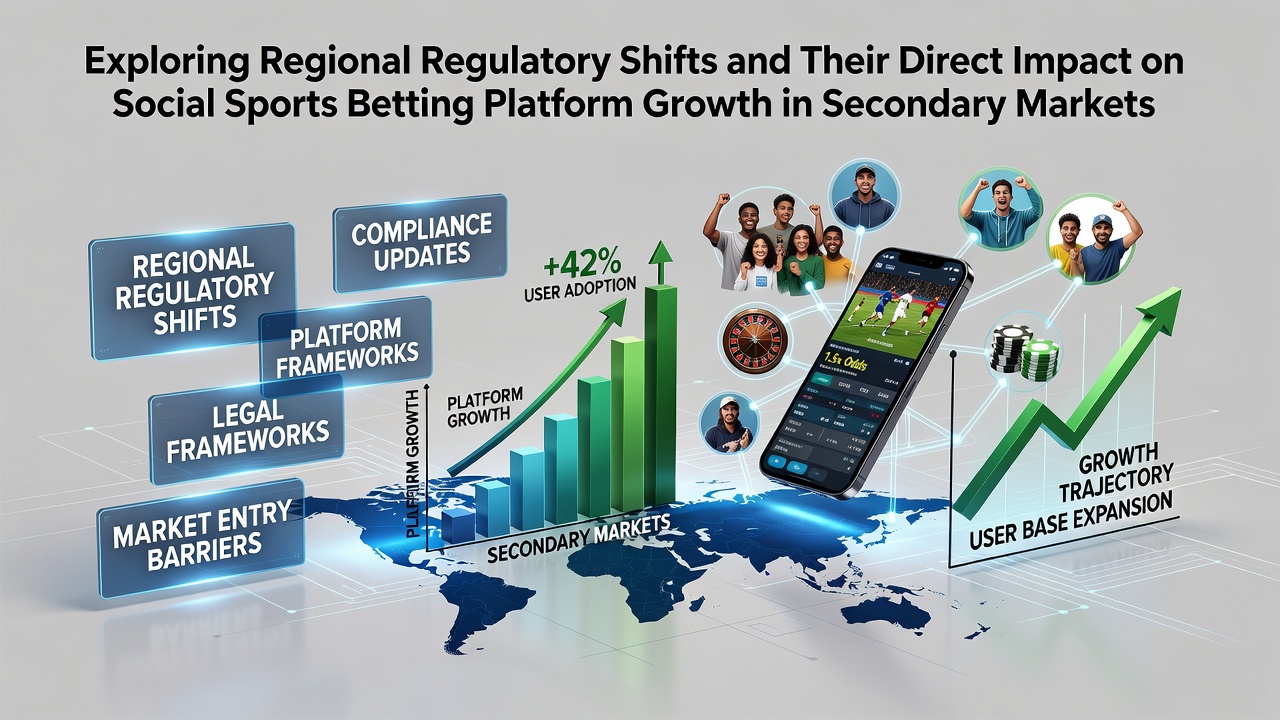
Regional Regulatory Evolution Drives Expansion Patterns for Social Sports Betting Platforms in Secondary Markets
Regulatory adjustments in multiple jurisdictions have begun reshaping how social sports betting platforms scale operations within secondary markets, where operators often test new features and user acquisition tactics before tackling larger regulatory environments. Data from industry reports indicate that these shifts create both openings and constraints depending on the specific rules adopted by local authorities, and platforms must adapt compliance frameworks accordingly while maintaining user engagement through social features.
North American Developments and Platform Responses
State-level changes in the United States continue to influence growth trajectories for platforms operating in secondary markets such as parts of Latin America and Southeast Asia, where many North American companies establish initial footholds. Research from the National Council on Problem Gambling shows that clearer licensing pathways in select U.S. states have encouraged operators to refine their social betting mechanics, including friend-based leaderboards and virtual currency systems, which they then export to less regulated areas. And while primary markets demand full compliance with age verification and responsible gaming mandates, secondary markets often allow faster iteration on these tools before stricter standards arrive.
Canadian provincial frameworks present another layer of influence, with Ontario's regulated market setting benchmarks that ripple outward to operators exploring opportunities in Caribbean and Central American jurisdictions. Figures reveal that platforms incorporating skill-based elements alongside traditional sports wagers have seen user retention rates climb when they align features with upcoming Canadian standards expected to tighten further by mid-2026.
European and Australian Regulatory Influences
Across Europe, updates from bodies like the Malta Gaming Authority have prompted social sports betting providers to adjust data handling practices that carry over into secondary markets in Africa and Eastern Europe. Observers note that these adjustments often involve enhanced transparency requirements for virtual currency transactions, which operators then apply uniformly to maintain consistent global operations. What's interesting is how platforms leverage these standards to build trust in emerging regions where users seek familiar safeguards without the full weight of primary market oversight.
Australian Communications and Media Authority guidelines offer parallel examples, as recent reviews of social gaming classifications have led operators to refine their sports betting products for secondary markets in the Asia-Pacific region. According to reports from the Interactive Games and Wagering Council, companies that integrate these classification updates early have expanded user bases in markets like Indonesia and Thailand by emphasizing responsible play mechanics developed in response to Australian requirements.

Impacts on Growth in Secondary Markets
Secondary markets benefit when regulatory clarity from larger jurisdictions reduces uncertainty around social features, allowing platforms to deploy localized versions of apps that incorporate friend challenges and group predictions. Research indicates that such adaptations have correlated with increased download volumes in regions where operators first tested mechanics refined under U.S. or European rules. Yet operators still face hurdles when secondary markets introduce their own restrictions, such as limits on promotional bonuses or requirements for local partnerships, which can slow scaling even as overall demand rises.
One study revealed that platforms which monitor regulatory calendars in primary markets and pre-emptively adjust social betting interfaces achieve steadier growth curves in secondary locations. These adjustments often include modular compliance layers that activate based on user location, ensuring smooth experiences while satisfying cross-border obligations. Data shows this approach has supported expansion into markets across Latin America and parts of Africa, where social elements drive initial adoption before monetization strategies mature.
Future Outlook Through Mid-2026
Anticipated regulatory updates taking effect around July 2026 in several Canadian and Australian jurisdictions are expected to further standardize practices that social sports betting platforms already apply in secondary markets. Those who've studied these patterns know that early alignment with such timelines positions operators to transfer refined features back into primary markets once full approvals arrive. Industry associations continue to track these developments, providing operators with resources that highlight successful adaptation strategies across diverse regulatory landscapes.
Conclusion
Regional regulatory shifts continue to steer the trajectory of social sports betting platform growth in secondary markets through a combination of compliance requirements and feature standardization. Operators that integrate insights from multiple jurisdictions, ranging from North American states to European authorities and Australian bodies, maintain flexibility while expanding their presence in emerging areas. This interconnected approach ensures platforms can respond to evolving rules without disrupting core social engagement tools that fuel user acquisition and retention worldwide.