
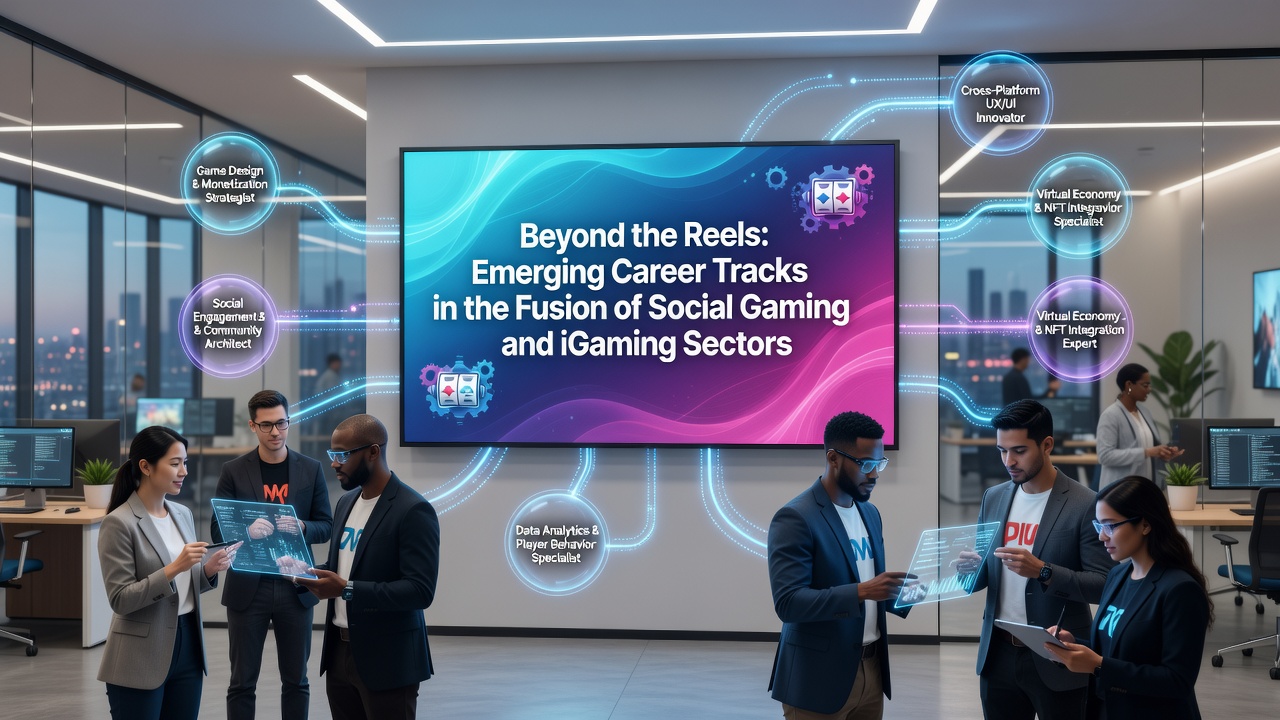
Beyond the Reels: Emerging Career Tracks in the Fusion of Social Gaming and iGaming Sectors
The boundaries between social gaming and iGaming continue to blur as companies develop platforms that combine interactive community features with regulated betting mechanics, and this convergence has opened specialized career paths that did not exist five years ago. Professionals now move between game studios and casino operators while acquiring skills in both user engagement systems and compliance frameworks that govern real-money play across multiple jurisdictions.
Data from industry reports shows steady demand for roles that bridge these worlds, including positions focused on social feature integration, cross-platform analytics, and responsible gaming design. In July 2026 several North American operators announced expansions that specifically called for talent experienced in building live-event mechanics into slot and table products, a move that followed regulatory updates in multiple Canadian provinces.
Hybrid Game Design and Community Systems Roles
Game designers who once specialized in either free-to-play mechanics or casino mathematics now find themselves working on unified titles that let players form groups, share achievements, and place regulated wagers within the same session. These hybrid designers coordinate with backend engineers to ensure that social leaderboards update in real time without violating strict rules on randomness and fairness enforced by bodies such as the Nevada Gaming Control Board.
Community managers have also evolved beyond traditional support duties, they now shape in-app events that tie social interactions directly to deposit and play patterns while monitoring for signs of problem behavior. Companies active in both sectors report that these managers often hold certifications in behavioral analytics, allowing them to adjust feature sets based on aggregated user data rather than anecdotal feedback.
Analytics and Player-Retention Specialists
Analytics teams have grown to include specialists who track how social features influence deposit frequency and session length across regulated markets. These professionals combine telemetry from social modules with transaction logs from iGaming wallets, producing models that predict churn while staying within data-protection statutes that differ between the United States, Australia, and the European Union.
One mid-sized operator in New Jersey expanded its retention unit in early 2026 by hiring data scientists who previously worked on mobile social titles, a hiring pattern that reflects the sector's need for expertise in viral mechanics that still comply with strict advertising and bonus regulations. Research published by the University of Nevada, Las Vegas gaming research center indicates that titles incorporating cooperative challenges retain players 18 percent longer on average than standard reel games, yet the same study notes that responsible-gaming interventions must be recalibrated when social pressure elements are present.
Compliance and Regulatory Technology Positions
Regulatory technology experts now design automated monitoring systems that flag both suspicious betting patterns and excessive social engagement that could indicate risk. These roles require familiarity with frameworks from the Australian Communications and Media Authority as well as state-level gaming commissions, because a single product may operate under different rules depending on the player's location.
Legal teams have added product counsel who review social features before launch to ensure they do not constitute unlicensed promotion of gambling. The workload has increased as platforms experiment with shared jackpots that span free and real-money versions of the same game, a development that demands precise separation of player pools and prize funds.
Marketing and Partnership Development Tracks
Marketing roles have shifted toward partnership managers who negotiate integrations between social platforms and licensed operators. These professionals coordinate cross-promotions that comply with advertising codes in each territory while measuring how social virality translates into verified iGaming traffic. Campaign data must satisfy audit requirements that vary by region, which has led some firms to create dedicated compliance reviewers within marketing departments.
Business development teams increasingly recruit from both traditional casino groups and large social gaming publishers, because deal structures now include revenue-share models tied to social feature performance rather than simple licensing fees. Contracts frequently reference performance metrics that blend engagement time with deposit conversion rates, requiring negotiators who understand both sides of teh ledger.
Conclusion
The fusion of social gaming and iGaming has produced career tracks that reward cross-disciplinary experience in design, analytics, compliance, and partnership management. Operators continue to post openings that list both sectors as prerequisites, and educational programs at several universities have begun offering modules that address the regulatory and technical overlap. As platforms scale these hybrid experiences, the professionals who can navigate the combined requirements will shape how the industry develops through the remainder of the decade.